“Dr. Vibe Show Takes” contains various types of content such as our “takes” on different subjects and events, what we are up to and useful pieces of information. Enjoy!!
“Dr. Vibe Show Takes” contains various types of content such as our “takes” on different subjects and events, what we are up to and useful pieces of information. Enjoy!!
Why don’t we do something about abysmal turnout among low-income voters, instead of fussing over Sanders’ comments? Click on the link below to read more.
All you need to listen to the conversation live is:
Desktop/Laptop: All you need to do is go to http://thedrvibeshow.com/ tonight at 9 p.m. Eastern/6 p.m. Pacific.
Tablet/Smartphone: Tonight at 9 p.m. Eastern/6 p.m. Pacific, please go to the “Mixlr” player at the bottom of http://thedrvibeshow.com/ and click on “Click To Play”.
During our live conversation, you have the opportunity to call in, share with us and ask questions. If you would like to do this, you can call (507) 237-8423 or doctorvibe42 (Skype). If you get through, please be patient and we will get to your call as soon as possible.
You can also provide your comments and questions during the event via Twitter (@drvibeshow#DrVibe) and at our Facebook Fan Page at “The Dr. Vibe Show” Facebook Fan Page.
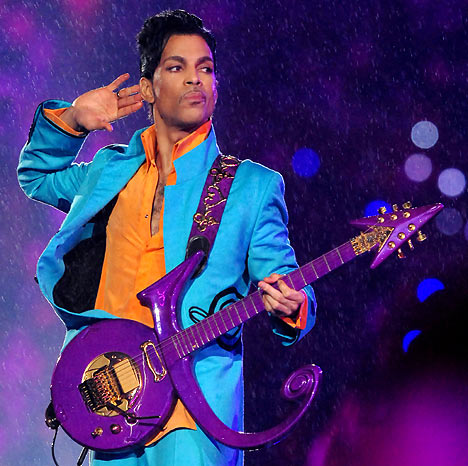
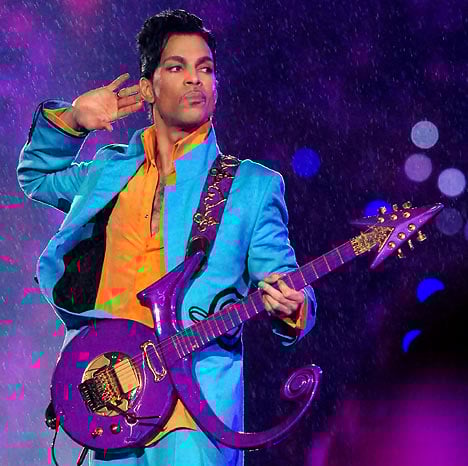
Charles Corprew III gives his thoughts on Prince’s impact on black masculinity.
—–
In the wake of the Purple One’s (Prince) death, I am left wondering about how courageous it is to be the man you want to be. We are pervaded by singular caricatures of Black masculinity, stoic, violent, womanizing. And yes, many of us prescribe to one or all of these characteristics at some point in our lives. Yet, the notion that Black men lack diversity in their masculinities is somewhat archaic, but Prince’s death reiterates the idea, or well, the antithetical argument that to be Black and masculine means that you had to run fervently from the feminine. For some reason, as I think back to my whimsical adolescence, I never questioned why this diminutive figure wore bikinis, go-go boots, scarves, and pastels. I admired his ability to draw out my own adolescent sexuality.
Like many teens growing up in the eighties, where sex and sexual exploration had been overtaken by conservative ideologies, the religious right, and Reagan’s diplomacy, Prince’s music excited me. When my parents weren’t around, I would sing loudly the words to “Darling Nikki,” “Erotic City,” and “Little Red Corvette.” My mother was a bible-thumper, and those words and gyrations were forbidden in my household. Yet, at no point did Prince’s mysterious and anti-prescribed masculinity turn me off; it only served as to propagate my propensity for adolescent promiscuity. In essence, it turned me on! I “Adore”d him. His music, along with MJ’s, was – as my fraternity brother and great friend, Todd Taylor, notes – the soundtrack of my adolescence.
I remember whaling the lyrics of “When Doves Cry” as a stringy ninth grader while I prepared for my track meets. I remember playing the air guitar rifts to “Purple Rain” in front of the mirror outside my room as an impressionable young Black boy. However, at no point during those perennial years of searching for my secure Black masculinity did I come to loath the salaciousness nature of Prince’s masculinity. It was as if he was a god, and those that dared to oppose his reign were merely cast aside, proverbially shown the door.
It is also interesting that Prince rose alongside the rise of hip-hop’s superstars LL Cool J, Run DMC, Kool G Rap, and Cool Herc and their heightened levels of hypermasculinity and misogyny. However, his ascension, unlike the greats of the latter genre, transcended race, gender, ethnicity, and sexual orientation. Although LL was known to flaunt his statuesque physique, at no point would he have dared to don a pastel G-string and boots and perform love ballads that motivated the fairer sex to litter stages with their own undergarments. Prince was the alternative we needed.
Throughout history, Black masculinity has been challenged, under-minded, and emasculated, thus resigning us to look for masculinities that feel secure and protective. Too often the end of this search mirrors the stereotypes that grip us like primates as we deal with the ramifications/consequences of internalized racism, discrimination, and oppression. What we saw in Prince for the last 40 years was a man who had the courage to define his own masculinity and sexuality in the midst of a population of men who have mostly fell in locked step to the cultural and societal prescriptions of masculinity. He was a “Revolution” as well as “Revolutionary,” as he used his self-described masculinity to overthrow powerful corporations, and to stand up for albums, and books, and Black lives, because they “matter.”
The take away from the Prince’s death is that more of us need the courage to be the Black men we want and need to be. We need to stop worrying about how our actions may be perceived in opposition to the Black masculinity box that holds us so tightly. We need to stop shaming our brothers who chose to express themselves contrary to our rigid mindsets and celebrate the diversity that exists in regard to Black Masculinity. If we learn anything from the “Purple One,” it is that being revolutionary means you can change the world and bring it together all at one time if you can find the courage to be who you want to be each second, each minute, each hour of each day.
—–
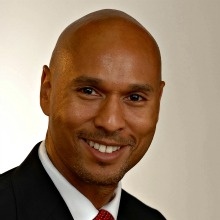
Dr. Charles S. Corprew, III is a transformational consultant, speaker, and leader. He dares to ask individuals and organizations, “What’s Your Revolution?” His experience coupled with engaging speech and dynamic method of building relationships with stakeholders has led to Charles becoming sought after for his ability to provide innovative solutions that aid individuals and organizations to reform the world.
Since the mid-1990’s, Dr. Corprew has used his skills to foster individual and organizational revolutions. He was the mastermind around the rejuvenation of the James Madison University African American Male Achievement Academy, a three-week summer intensive program geared toward promoting matriculation and fostering positive social and academic success for adolescent African American males. He was instrumental in constructing the mentoring component of New Orleans’s Mayor Mitch Landrieu’s NOLA for Life program. He evaluated the effectiveness of one of New Orleans’ most prolific mentoring organizations, the Silverback Society. This insightful evaluation was a critical piece in helping the organization secure a $175,000 dollar grant from New Orleans’s Institute of Mental Hygiene. Currently, Charles is consulting with the leadership and staff at Sayre School in Lexington, KY to ensure an inclusive environment for all students. As well as chairs and facilitates Virginia Beach City Public Schools’ Student Discipline Task Force. The goal of the taskforce is to guarantee all students have the opportunity to stay in school and garner a stellar education. Charles also speaks regularly on such topics, “What’s Your Revolution?”, and “A Revolution: Men’s Journey from Hypermasculinity to Healthy Masculinity.”
Dr. Charles S. Corprew, III is a transformational consultant, speaker, and leader. He dares to ask individuals and organizations, “What’s Your Revolution?” His experience coupled with engaging speech and dynamic method of building relationships with stakeholders has led to Charles becoming sought after for his ability to provide innovative solutions that aid individuals and organizations to reform the world.
Since the mid-1990’s, Dr. Corprew has used his skills to foster individual and organizational revolutions. He was the mastermind around the rejuvenation of the James Madison University African American Male Achievement Academy, a three-week summer intensive program geared toward promoting matriculation and fostering positive social and academic success for adolescent African American males. He was instrumental in constructing the mentoring component of New Orleans’s Mayor Mitch Landrieu’s NOLA for Life program. He evaluated the effectiveness of one of New Orleans’ most prolific mentoring organizations, the Silverback Society. This insightful evaluation was a critical piece in helping the organization secure a $175,000 dollar grant from New Orleans’s Institute of Mental Hygiene. Currently, Charles is consulting with the leadership and staff at Sayre School in Lexington, KY to ensure an inclusive environment for all students. As well as chairs and facilitates Virginia Beach City Public Schools’ Student Discipline Task Force. The goal of the taskforce is to guarantee all students have the opportunity to stay in school and garner a stellar education. Charles also speaks regularly on such topics, “What’s Your Revolution?”, and “A Revolution: Men’s Journey from Hypermasculinity to Healthy Masculinity.”
Dr. Corprew will be on our show live today at p.m. 7 Eastern/4 p.m. Pacific. He will be talking about The Dr. Vibe Show™: Prince And His Impact On Black Masculinity.
All you need to do to listen to the conversation live is:
Desktop/Laptop: All you need to do is go to http://thedrvibeshow.com/ tonight at 9 p.m. Eastern/6 p.m. Pacific.
Tablet/Smartphone: Tonight at 9 p.m. Eastern/6 p.m. Pacific, please go to the “Mixlr” player at the bottom of http://thedrvibeshow.com/ and click on “Click To Play”.
You can also provide your comments and questions during the event via Twitter (@drvibeshow#DrVibe) and at our Facebook Fan Page at “The Dr. Vibe Show” Facebook Fan Page.
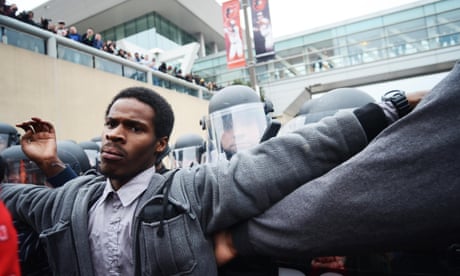
Shaun Young, 27, was among those who protested against police brutality in the wake of Gray’s death in custody. His assessment of what has changed: ‘Now you get in the paddy wagon they’re gonna buckle you up’. Click on the link below to read more.